
A World of Coffee: Exploring Plantations in Brazil, Vietnam,
Types of coffee -Coffee is more than just a morning pick-me-up; it’s a global phenomenon with a rich and diverse history. While the final cup might look similar, the journey from bean to brew varies significantly depending on where the coffee is grown. Understanding these botanical distinctions is crucial for any true enthusiast. Among the over 120 species in existence, the two main types of coffee plants that dominate the market are Arabica (Coffea arabica) and Robusta (Coffea canephora).
Arabica is generally revered for its nuanced flavors, sweetness, and acidity, typically requiring higher altitudes and cooler climates to thrive. In contrast, Robusta is prized for its bold strength, high caffeine content, and agricultural hardiness in hotter, lower climates. These biological differences dictate the farming methods used worldwide and ultimately shape the unique profile of every cup you drink.
Let’s take a virtual tour of three of the world’s top coffee-producing nations – Brazil, Vietnam, and India – to see how their unique landscapes and farming traditions shape the coffee we drink.
Brazil: The Titan of Coffee Production
As the undisputed world leader in coffee production, Brazil is synonymous with the bean. Its vast, sun-drenched landscapes are perfect for growing Arabica coffee on a massive scale. Brazilian coffee is often characterized by its nutty, sweet flavor and low acidity, making it a popular base for many blends.
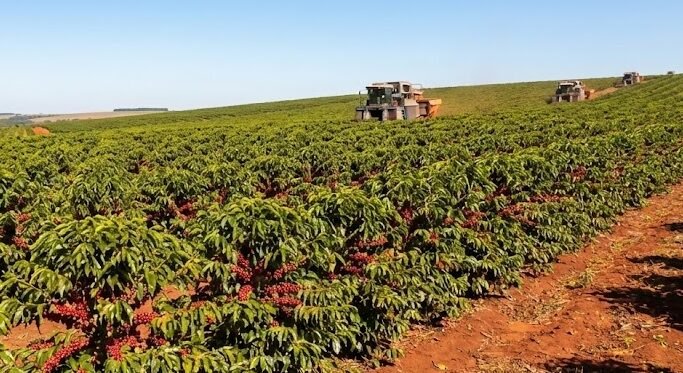
Unlike many other coffee-growing regions that rely on manual labor on steep slopes, Brazil’s relatively flat terrain allows for mechanization. As seen in the image above, large harvesting machines can be used to efficiently collect the coffee cherries, contributing to the country’s immense output. This modern approach to farming is a hallmark of the Brazilian coffee industry.
Vietnam: The Robusta Powerhouse
Vietnam is the world’s second-largest coffee producer, and its specialty is the robust and caffeine-rich Robusta bean. The country’s central highlands provide the ideal hot and humid climate for this hardy plant to thrive. Vietnamese coffee is known for its strong, bold flavor, often enjoyed with sweetened condensed milk in the famous cà phê sữa đá.
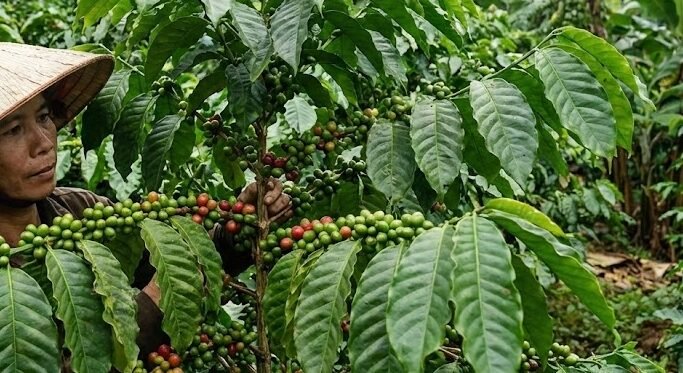
Coffee farming in Vietnam is often a family affair, with smaller plots of land cared for by dedicated farmers. The image above shows a farmer in a traditional nón lá harvesting coffee cherries by hand. The Robusta plant itself, with its larger leaves and clusters of cherries, is distinct from the Arabica bushes seen in Brazil. This hands-on approach is typical of Vietnamese coffee cultivation.
India: The Shade-Grown Haven
India offers a unique perspective on coffee cultivation. Most of India’s coffee is grown in the southern states of Karnataka(Kodagu/Coorg is the largest coffee producers in India), Kerala, and Tamil Nadu, in the biodiverse Western Ghats. What sets Indian coffee apart is that it is almost exclusively shade-grown.
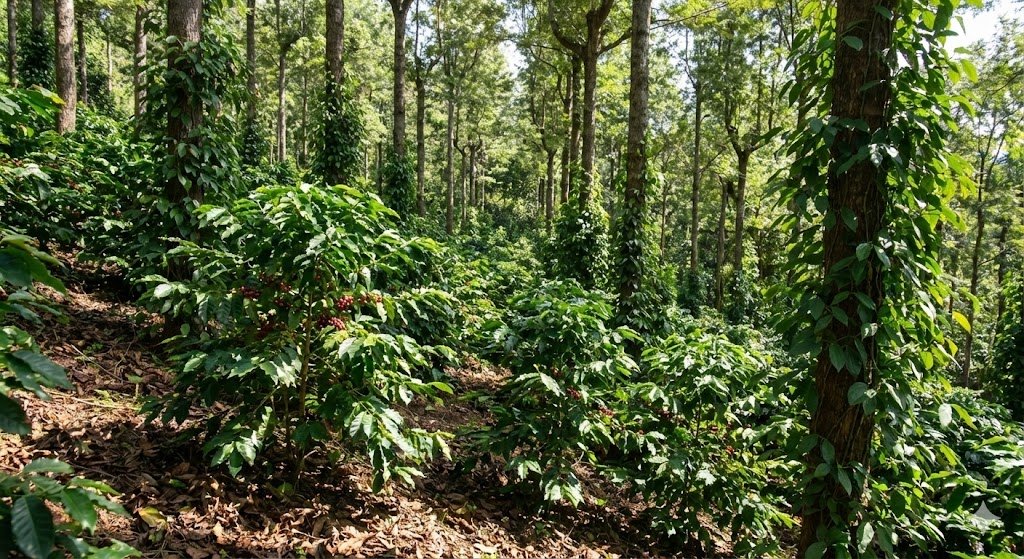
As the image illustrates, Indian coffee plantations are often two-tier systems, with coffee bushes growing under a canopy of taller, often leguminous, shade trees. These plantations are typically intercropped with spices like pepper, cardamom, and vanilla, which can impart subtle, unique flavor notes to the coffee beans. This method is not only environmentally friendly but also produces coffee with a distinct, mild character and lower acidity.
Conclusion
From the mechanized Arabica fields of Brazil to the traditional Robusta farms of Vietnam and the biodiverse, shade-grown plantations of India, the world of coffee is a tapestry of cultures, landscapes, and farming practices. Each region’s unique approach contributes to the diverse array of flavors and aromas that coffee lovers around the world enjoy. The next time you savor your cup, take a moment to appreciate the journey it has taken from a distant plantation to your home.
Try Best South Indian Coffee